Roof-mounted bike racks offer a sleek and efficient way to transport your bike without sacrificing rear access or trunk space. They’re ideal for cyclists who want to carry one or more bikes without blocking license plates, tail lights, or hitch space. But not all roof racks are created equal. Some work best with specific crossbar types, while others are easier to load or better suited for carbon frames.
If you’re considering a roof rack system for your bike, this guide will help you make a confident choice.
What to Know Up Front
Before picking a roof-mounted rack, make sure your vehicle can handle it. You’ll need compatible crossbars (factory or aftermarket), and you’ll need to be comfortable lifting your bike overhead. Wind resistance, clearance height, and ease of installation all vary widely across models.
Not every rack works with every frame style. Carbon frames, thru-axles, and fat tires may need a rack with specific compatibility or adapters.
So, What Should You Buy?
These roof-mounted racks combine secure bike holding with thoughtful features and broad compatibility. Whether you’re hauling a single road bike or a full-suspension mountain machine, one of these should fit the bill.
Best Overall Roof-Mounted Bike Rack
Our Top Pick
No products found.
Best for Quick Loading
No products found.
Best Budget Pick
No products found.
Best for Aero Bars
No products found.
Best Fork-Mount Rack
No products found.
A Buyer’s Guide to Roof-Mounted Bike Racks
Roof Clearance and Lift Height
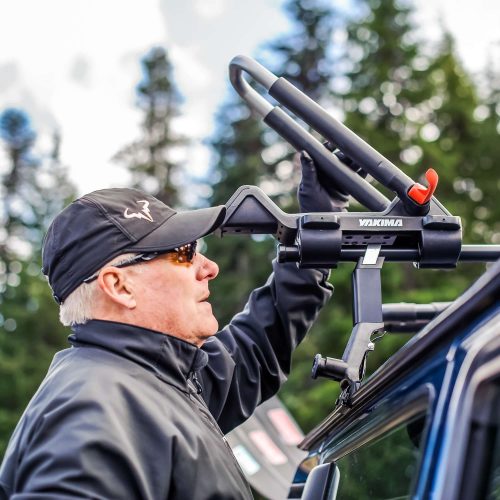
Roof racks require lifting bikes above your head, which may not be ideal for everyone. SUVs and trucks will require even more overhead reach. If you’re on the shorter side or have a heavier e-bike, consider whether roof-mounting is practical.
Crossbar Compatibility
Not all racks work with all bar types. Aero bars, factory bars, and round bars have different profiles. Look for racks with tool-free universal mounting systems that support all three. Some cheaper models only work with square or round bars, which limits flexibility.
Frame vs. Wheel Mounting
There are two main types:
- Frame-hold racks use clamps on the bike frame. These are more affordable but can scratch paint and are not ideal for carbon frames.
- Wheel-hold racks support the bike via the wheels. These are safer for carbon bikes, typically quicker to load, and reduce the risk of frame damage.
Fork Mount vs. Upright Racks
Fork-mount racks require removing the front wheel, which lowers your roof profile and improves stability. Upright racks keep the bike fully assembled for convenience but may be taller and slightly less secure in high winds.
Key trade-off: Fork-mount = better aerodynamics and security. Upright = faster loading and no disassembly.
Locking and Theft Protection
Most premium models include integrated locks for both the rack and the bike. Budget models often skip this or charge extra for locks. If you plan to leave your bike unattended, this is a must-have.
- Check for integrated cable or skewer locks
- Consider adding a secondary lock for peace of mind
Bike Compatibility
Make sure the rack fits your bike’s wheel size, tire width, and axle type. Fat bikes, kids’ bikes, and bikes with thru-axles all require specific support. The best racks accommodate a wide range without adapters.
Long-Term Use and Durability
If you ride often or plan to keep the rack on full-time, prioritize aluminum builds, UV-resistant coatings, and rust-proof hardware. Quick-release levers and tool-free installs make life easier over time, especially if switching vehicles.
Final Thoughts
Roof-mounted bike racks offer a clean and secure way to transport your bike, especially when hitch access needs to stay open. They shine for solo riders and road cyclists but demand a little more effort in loading and unloading. As long as you match the rack to your bike frame, tire size, and roof setup, you’ll be able to hit the road with confidence.
Just remember: lifting heavy bikes onto the roof isn’t for everyone. But if that’s not an issue, these racks offer unmatched versatility and keep your rear cargo area free.
Frequently Asked Questions

Willem is an avid mountain biker and outdoor sports enthusiast. For years, he has been riding mountain bike stage races, including the grueling Cape Epic. As a father of three adventurous kids, he knows about packing a vehicle to haul his gear safely and responsibly from home to any exciting weekend or holiday destination.